
System zur Erkennung übergroßer und großer Felsen
für Bergbau und Steinbrüche
Übergroße Gesteinsbrocken, die vor Ort oft als große Steine oder Felsbrocken bezeichnet werden und in Brecher und Förderanlagen gelangen, gehören zu den häufigsten Ursachen für ungeplante Produktionsausfälle im Bergbau und in Steinbrüchen. Ein einzelner Felsbrocken kann den Einlauf eines Brechers blockieren, Verschleißteile überlasten oder den Einsatz eines Brechers erforderlich machen – und so die normale Produktion in einen Notfall verwandeln.
Das System zur Erkennung von übergroßen Steinen und Felsbrocken überwacht kontinuierlich das Material auf Förderbändern, in Ablademulden und unter der Entladestelle von Muldenkippern. Es erkennt übergroße Steine in Echtzeit und löst Alarme oder Kontrollmaßnahmen aus, bevor ein Felsbrocken kritische Anlagen erreicht.
Dieses System dient dem Echtzeit-Schutz der Primärbrechzufuhr in Bergwerken und Steinbrüchen. Eine detaillierte Beschreibung der Funktionsweise und der Einsatzorte dieser Erkennung finden Sie im [Dokument/der Dokumentation einfügen]. Installations- und Sensortechnik Abschnitt.
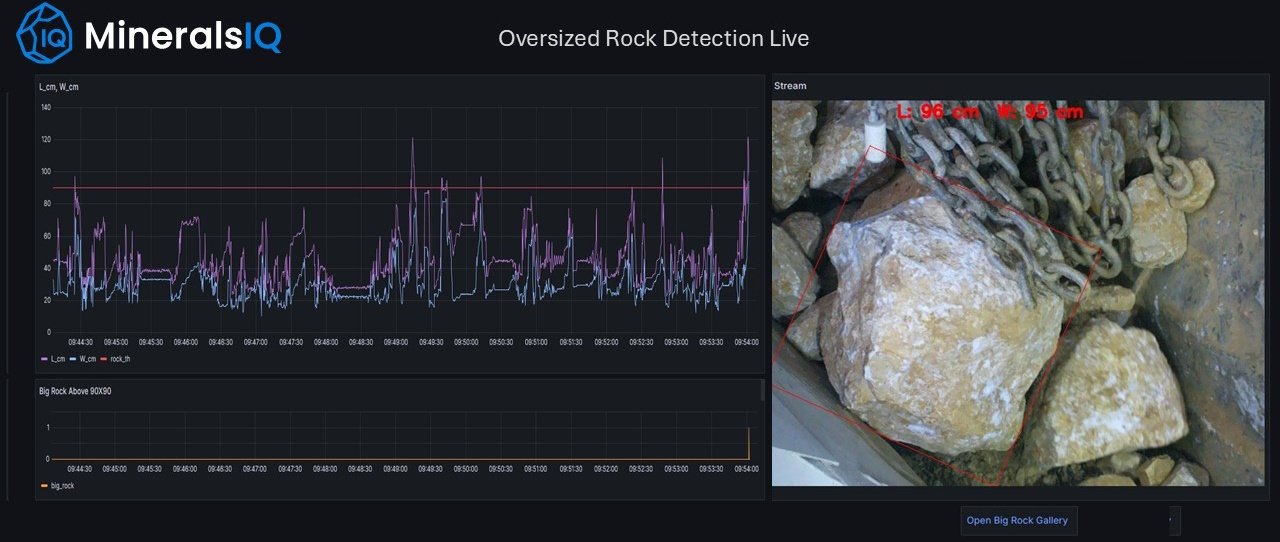
Was das System tut
Das System zur Erkennung übergroßer Felsen und Gerölle erfüllt drei Kernfunktionen:
- Misst die Größe von Gesteinsbrocken in Bewegung
Industriekameras analysieren das Material während seiner Bewegung oder beim Abladen, identifizieren einzelne Steine und schätzen deren Größe in Echtzeit. - Klassifiziert übergroßes und großes Gesteinsmaterial
Gesteinsbrocken, die die festgelegten Grenzwerte überschreiten, werden als Felsbrocken identifiziert, bevor sie kritische Anlagen erreichen. - Löst eine Pflanzenreaktion aus
Wird ein Felsbrocken erkannt, kann das System die Bediener alarmieren, die Zufuhr über SPS-Steuerungen stoppen oder isolieren und Benachrichtigungen per SMS oder Anruf an das Schichtpersonal senden.
Dadurch werden unkontrollierte Brecherstörungen in kontrollierte Prozessereignisse umgewandelt, wodurch ungeplante Ausfallzeiten, Verschleißteileschäden und Wartungskosten reduziert werden. Die vollständigen betrieblichen und finanziellen Auswirkungen von übergroßen Gesteinsbrocken werden im Folgenden detailliert beschrieben. Ausfallzeiten der Brechanlage vermeiden Abschnitt.
Warum das wichtig ist
Brecher und Zuführanlagen sind für eine definierte maximale Aufgabegröße ausgelegt. Gelangen zu große Gesteinsbrocken in das System, führt dies zu Folgendem:
- Blockaden und Überbrückungen
- Antriebsüberlastungen und Fahrten
- Felsbrechereingriff
- Beschleunigter Verschleiß und Geräteschäden
- Produktionsausfall
Es ist weitaus effektiver, diese Ereignisse zu verhindern, bevor sie den Brecher erreichen, als erst zu reagieren, wenn es bereits zu einer Blockade gekommen ist.
Wo wird die Erkennung angewendet?
Das System zur Erkennung von übergroßen Steinen und Felsbrocken kann überall dort installiert werden, wo übergroßes Material in das Werk gelangt oder sich durch es bewegt:
- LKW-Kippmulden und Abladetaschen
- Förderbänder und Übergabepunkte
- Plattenband- und Vibrationsförderer
- Zuführrutschen für Brecher
Dadurch können übergroße Gesteinsbrocken abgefangen werden, bevor sie Geräte erreichen, die sie nicht handhaben können. Die technischen Gründe, warum diese Standorte die zuverlässigsten Messungen ermöglichen, werden im Folgenden beschrieben. Seite „Installation & Sensortechnik“.
Integration in die Anlagenautomatisierung
Das System ist direkt mit den Anlagensteuerungssystemen verbunden, darunter:
- SPS und Verriegelungslogik
- Förderband- und Zuführsteuerungen
- Brecherzuführungssysteme
- Bediener-HMIs
- SMS- und Anrufbenachrichtigungen
Dadurch wird die Erkennung von Felsbrocken zu einem Bestandteil der Standardbetriebslogik und nicht zu einem eigenständigen Warnsystem.
Für den industriellen Betrieb konzipiert
Das System nutzt industrietaugliche Kameras, kontrollierte Beleuchtung und eine robuste Montage, um auch unter den in Bergwerken und Steinbrüchen typischen Bedingungen wie Staub, Vibrationen und wechselnden Lichtverhältnissen zuverlässig zu arbeiten. Die Echtzeit-Erkennung von übergroßen Felsbrocken ermöglicht folgende Vorteile:
- Verstopfungen der Brechanlage verhindern
- Reduzierung des Einsatzes von Gesteinsbrechern
- Schützen Sie Bänder, Zuführungen und Auskleidungen
- Stabilen Durchsatz aufrechterhalten
- Reduzierung ungeplanter Ausfallzeiten
Es handelt sich um eine direkte Methode, um eines der wichtigsten Elemente in jedem Materialflussprozess zu schützen. Eine detaillierte Aufschlüsselung der Auswirkungen von durch Felsbrocken verursachten Stillständen auf Produktion, Instandhaltung und Sicherheit wird bereitgestellt in Ausfallzeiten der Brechanlage vermeiden.
Eine kurze Frage von unserer Seite
Übergroße Felsbrocken werden in Steinbrüchen und Bergwerken unterschiedlich gehandhabt, wobei die Vorgehensweisen oft eher von lokalen Gepflogenheiten als von formalen Verfahren abhängen.
Häufig gestellte Fragen – System zur Erkennung übergroßer Felsen und Gerölle
Wie erkennt man übergroße Steine auf einem Förderband?
Eine über dem Förderband montierte Kamera erfasst kontinuierlich Bilder des Materialstroms. Die Bildanalyse identifiziert einzelne Gesteinsbrocken und berechnet deren Größe im Verhältnis zu festgelegten Grenzwerten.
Kann die Detektion an LKW-Entladestellen eingesetzt werden?
Ja. Das System zur Erkennung übergroßer Steine und Felsbrocken kann über Ablademulden oder Kippgittern montiert werden, um das Material beim Abladen aus den Muldenkippern zu analysieren.
Wie schnell reagiert das System?
Die Erkennung und Alarmierung erfolgen in Sekundenbruchteilen, sodass die Zufuhr gestoppt oder umgeleitet werden kann, bevor ein Felsbrocken den Brecher oder die Zuführung erreicht.
Was passiert, wenn ein Felsbrocken entdeckt wird?
Das System kann eine Bedienerwarnung ausgeben, ein Förderband oder eine Zuführung stoppen, SPS-Verriegelungen aktivieren und SMS- oder Telefonbenachrichtigungen an das zuständige Schichtpersonal senden, damit unverzüglich Maßnahmen ergriffen werden können.
Sind hierfür Änderungen bei Spreng- oder Bergbauverfahren erforderlich?
Nein. Das System zur Erkennung übergroßer Steine und Felsbrocken ist mit den bestehenden Materialhandhabungs- und Sprengverfahren kompatibel. Es bietet eine zusätzliche Schutzebene auf Prozessebene.
Wodurch wird die maximale Größe der Felsbrocken bestimmt?
Die Grenzwerte werden anhand der Brecheröffnung, der Zuführungskapazität oder der Rutschengeometrie konfiguriert und können bei sich ändernden Betriebsbedingungen angepasst werden.
Lässt sich das System später erweitern?
Ja. Zusätzliche Kameras oder Detektionspunkte können hinzugefügt werden, um den Schutz auf andere Teile der Materialflusskette auszudehnen.